
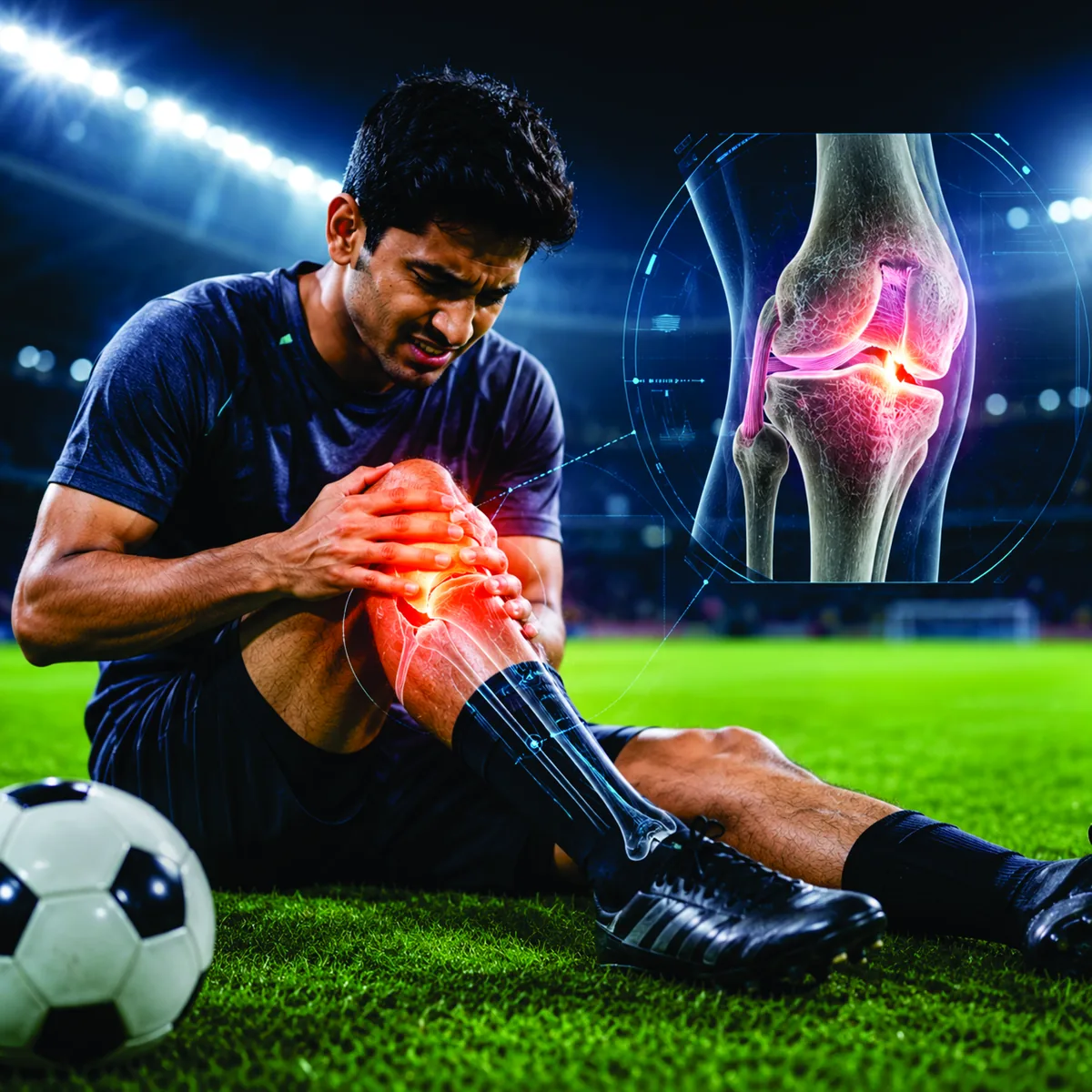
A knee injury can range from a minor strain to a serious problem that needs prompt medical assessment. Pain alone cannot identify the injured structure, and online descriptions cannot determine whether a ligament, tendon, bone or other part is involved. An orthopaedic assessment in Bathinda can review how the injury happened, examine the knee and decide whether imaging or referral is appropriate.
What to do immediately after a knee injury
After an injury, stop the activity if continuing causes pain or instability and avoid testing the joint repeatedly. If there is a visible deformity, severe pain, inability to bear weight, a large rapid swelling, an open wound or numbness, seek urgent medical care. Do not try to force the knee back into position or follow an exercise plan found online. The right first-aid steps depend on the injury and other health conditions. If symptoms are mild but do not improve or keep returning, arrange an assessment and describe exactly how the injury occurred.
How injury details help the examination
A clinician may ask whether the knee twisted, was struck, bent awkwardly or was overloaded, and whether a pop, swelling, locking or instability occurred. They may ask when swelling began and whether walking was possible afterwards. These details can guide the examination, but they do not confirm a diagnosis on their own. Explain any earlier knee injury, operation or arthritis. Tell the doctor about medicines, allergies and health conditions that affect bleeding, bone health or recovery. Accurate details help the clinician decide whether an X-ray, another scan or a different service is needed.
Why a knee examination matters
The clinician may observe how you stand or walk, check the knee’s movement, assess tenderness and evaluate stability. Some tests may be uncomfortable, so tell the clinician if pain increases. The examination should be adapted to the patient and the injury. An online symptom checker or a friend’s experience cannot replace it because two injuries with similar pain can affect different structures. Ask the clinician to explain what the examination suggests and which findings remain uncertain. If the knee is too painful or swollen to examine fully, the clinician can advise what should happen next.
Imaging and follow-up investigations
Not every knee injury requires imaging. The clinician decides whether an X-ray or another investigation is useful based on the history, examination and concern being assessed. An image helps answer a specific question; it should not be interpreted without the patient’s symptoms and findings. If a scan is suggested, ask what it is expected to show and whether the result would change the treatment plan. Bring earlier images or reports if available, but avoid repeating tests without discussing whether the existing study is adequate. The clinician may recommend review after an initial period if the diagnosis is not yet clear.
Non-operative care and rehabilitation
Many injury plans begin with activity guidance, a period of protection or modified loading, and a clinician-directed return to movement. A physiotherapist may guide strength, mobility, balance or sport-specific progression when appropriate. The plan depends on the injured structure and severity, so a generic exercise list can be unsuitable. Ask which movements are permitted, whether a brace or walking aid is needed, what discomfort is expected and when to review progress. Do not return to sport solely because pain has briefly reduced. A safe progression is based on function and professional advice.
When a procedure or surgery may be discussed
Some injuries need a procedure, while others can be managed without an operation. The decision depends on the confirmed injury, its effect on function, other health factors, the patient’s goals and response to initial care. A surgeon should explain the intended benefit, alternatives, risks, timing and rehabilitation before consent. Ask whether a second opinion is reasonable and what could happen if you wait. A procedure should not be promoted as inevitable simply because an injury is visible on a scan. Seek clear answers about who would perform it and where it would take place.
When a sports injury needs another opinion
A recurring injury, continuing instability, a locked knee or symptoms that do not improve as expected may need another assessment. Bring any emergency-care notes, imaging results and rehabilitation instructions to the appointment. Explain what activities you have resumed and whether symptoms returned during or after them. The clinician can review whether the original diagnosis still fits, whether further investigation is useful and whether a different rehabilitation plan or referral should be considered. Do not increase activity simply to test the knee, especially when it is swollen, unstable or painful. Seek urgent care for severe symptoms, visible deformity or sudden inability to bear weight.
Returning to work, walking and sport
Return-to-activity decisions depend on the diagnosis, symptoms, job demands, sport, treatment and recovery. Ask for guidance about standing, lifting, stairs, driving and sport separately rather than expecting one return date to cover everything. A gradual increase in activity may be appropriate, but the clinician or physiotherapist should set limits for your case. Keep follow-up appointments if recommended and report recurring swelling, instability, locking or worsening pain. If your work or caregiving duties make rest difficult, tell the team so that planning can account for practical constraints.
Warning signs during recovery
Seek medical advice if pain or swelling is rapidly worsening, a new inability to bear weight develops, the knee becomes hot and red, fever appears, or there is new numbness, marked calf swelling or another concerning change. Chest pain, sudden breathlessness or collapse require emergency attention. These examples do not replace the instructions from your treating clinician, who can identify risks specific to your injury or procedure. Ask in advance which number to call outside clinic hours and which facility to use if symptoms become urgent. Do not wait for a routine follow-up when serious warning signs appear.
Booking a knee injury assessment in Bathinda
Nagpal Joint Clinic is located at Mall Road, Bathinda, and lists Monday to Saturday hours from 10:00 AM to 7:00 PM. Call +91 98551-63355 before travelling to confirm availability, fees and whether the clinic can assess the type of injury you have. Bring any emergency-care notes, imaging reports, medicines and a brief account of how the injury occurred. If the injury is severe or the knee looks deformed, do not delay urgent care to arrange a routine consultation. The doctor can discuss the assessment and explain whether another service or specialist should be involved.
ACL injury assessment and return to activity
An injury to the anterior cruciate ligament (ACL) can happen during a sudden change of direction, landing or contact, but similar symptoms may arise from other knee structures. A clinician considers how the injury happened, swelling, instability, movement and relevant imaging before discussing next steps. Treatment may involve rehabilitation, further assessment or a procedure depending on the injury and the person’s goals. Return to sport should be gradual and guided by function and professional advice, not by a fixed number of days or pain reduction alone. Ask who will supervise rehabilitation and what milestones should be met before increasing activity.
Notes to record after a knee injury
If it is safe to do so, write down the date and mechanism of injury, when swelling started, whether you could bear weight and whether the knee has locked or felt unstable. Record any first aid or assessment already received and the names of medicines given. Do not repeatedly bend, twist or load the knee just to test it. Bring discharge instructions and imaging reports to follow-up, and tell the clinician if symptoms have changed since the first visit. These details can help an orthopaedic surgeon assess whether further investigation or a different recovery plan is needed. Severe pain, visible deformity, numbness or inability to bear weight warrants prompt medical attention instead of waiting for a routine appointment.
Common questions
Does every knee injury need an MRI?
No. A clinician decides whether imaging is needed after reviewing the injury history and examination.
Can every sports injury be treated without surgery?
No single treatment fits every injury. A clinician considers the injured structure, severity, function, health and activity goals before discussing options.
When should I seek urgent help after a knee injury?
Seek prompt care for deformity, inability to bear weight, severe pain, rapid swelling, an open wound, numbness or other serious symptoms.
Can I return to sport when the pain improves?
Ask your treating clinician or physiotherapist. Return depends on the injury, function and recovery—not pain alone.
When should a knee injury be assessed?
Arrange prompt assessment for a major injury, severe swelling, a locked or unstable knee, inability to bear weight, new numbness or rapidly worsening symptoms.
Consultation at Nagpal Joint Clinic
Nagpal Joint Clinic is at Nagpal Superspeciality Hospital, Mall Road, Bathinda, Punjab 151001. The clinic lists Monday to Saturday hours from 10:00 AM to 7:00 PM. Call +91 98551-63355 to confirm current hours, availability and consultation fees before you travel. Bring existing reports or images, a list of medicines and allergies, and notes about the activities affected by your symptoms.
A consultation is an opportunity to discuss your symptoms and options; it does not commit you to surgery. If a procedure is recommended, ask which hospital or operating facility will provide it, who is on the clinical team, what the written estimate includes and how follow-up is arranged. Clinic services, fees and operating arrangements can change, so verify them directly.
Medical information: This page is for general education and is not a diagnosis or a substitute for care from a qualified clinician. Treatment suitability and outcomes vary. Seek prompt medical attention for severe or rapidly worsening symptoms.
For directions, open Nagpal Superspeciality Hospital in Google Maps. Confirm the location pin and travel arrangements before setting out.