
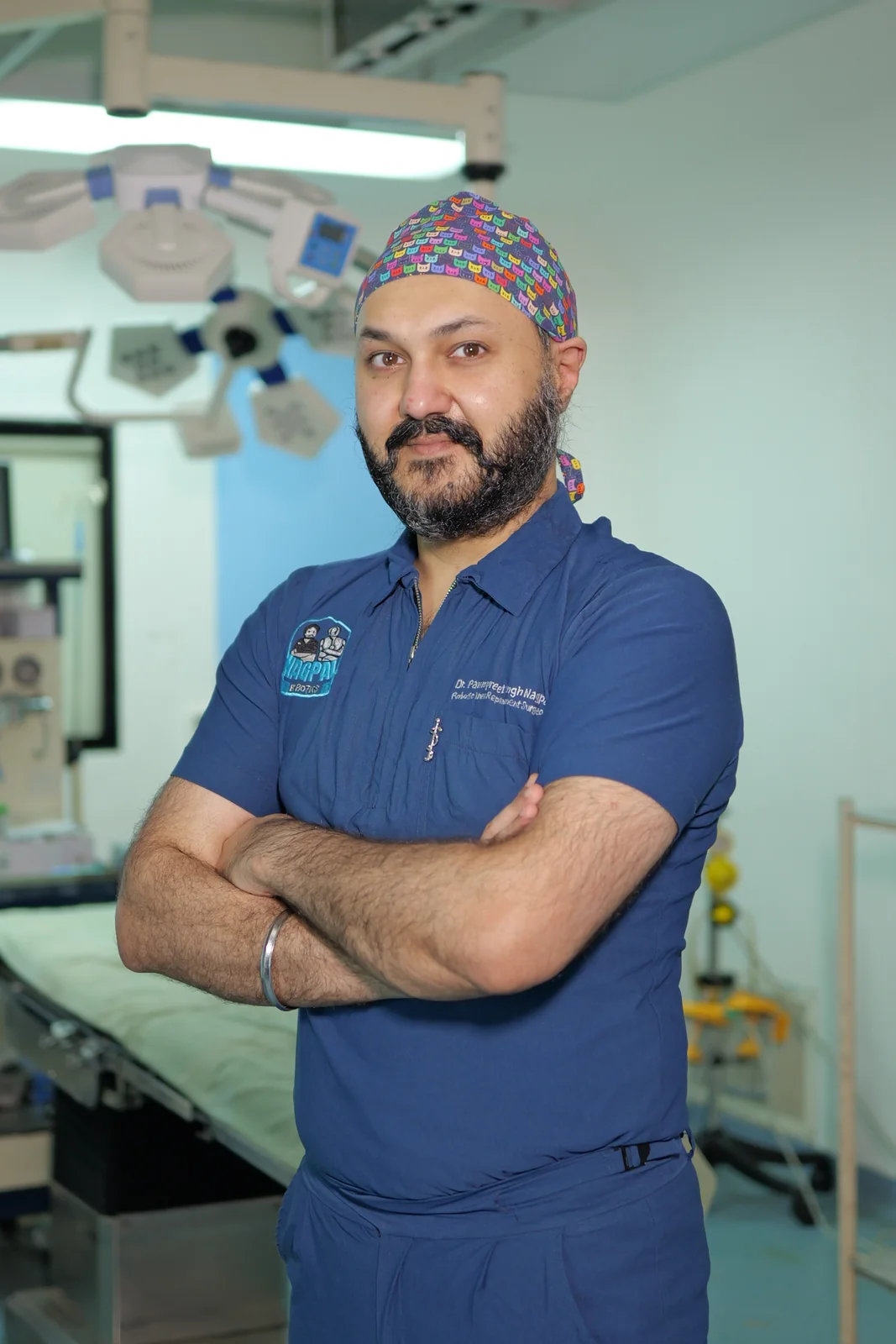
People searching for knee resurfacing in Bathinda may be referring to different procedures, including partial knee replacement or total knee replacement. The exact meaning depends on the diagnosis and the treatment being discussed. A consultation should clarify which part of the joint is affected, what imaging shows, what alternatives exist and whether a resurfacing-type operation is appropriate. At Nagpal Joint Clinic, Dr. P.S. Nagpal can discuss knee symptoms and orthopaedic options; the final surgical plan must be based on an examination and the patient’s full medical context.
Why the term resurfacing needs clarification
“Knee resurfacing” is often used informally by patients and online sources, but it does not describe one identical operation in every context. Some people mean partial knee replacement, which addresses a selected part of the joint in appropriate cases; others use it to describe total replacement components covering joint surfaces. Before comparing treatment options, ask the surgeon to name the exact procedure, the structures involved and the implant plan. A clear explanation prevents marketing terminology from substituting for informed consent and helps patients compare like with like.
How a clinician decides what part of the knee is affected
The clinician reviews where pain is felt, how long it has been present, whether the knee swells or feels unstable, and which tasks are limited. Examination can assess movement, alignment, tenderness and ligament stability. Imaging may show changes in one or multiple parts of the joint, but it is only one part of the decision. The surgeon considers whether the pattern of symptoms and examination fits the imaging and whether other causes need investigation. Ask the clinician to point out the relevant findings and explain why the proposed option matches them.
Partial and total knee replacement are not interchangeable
A partial replacement is considered only for selected patients and depends on the location and extent of joint disease, stability, alignment and other findings. Total knee replacement addresses a broader portion of the joint. Neither option is automatically superior for every patient. The surgeon should explain the intended benefits, limitations, risks, recovery expectations and circumstances that might change the plan during surgery. If a partial procedure is being considered, ask what findings would make the surgeon recommend a different operation. If total replacement is proposed, ask why a more limited option is not suitable.
Who may be assessed for resurfacing-type surgery
An evaluation may be appropriate for someone with persistent symptoms that affect function and clinical findings that suggest a specific part of the knee is damaged. Suitability is not decided by age or a single scan. Other health conditions, prior operations, ligament function, alignment and the patient’s goals can matter. A knee surgeon should describe whether non-operative care remains reasonable, whether additional tests are needed and how the decision will be made. A website cannot assess candidacy. Bring questions and records to a qualified clinician rather than trying to match yourself to a procedure from symptoms alone.
Robotic assistance and resurfacing options
Robotic assistance may be used in selected knee replacement procedures, including particular partial or total approaches, depending on the surgeon, platform and clinical indication. It does not mean the robot independently decides how much of a joint to treat. Ask whether the proposed system is used for the specific operation under discussion, what information is needed for planning and whether the surgeon may adjust the plan based on direct findings. A non-robotic approach may be appropriate in some cases. The decision should start with the patient’s diagnosis and clinical need, not the availability of a device.
Benefits, risks and questions about durability
A surgeon can discuss the aims of the procedure and how expected function may differ between partial and total replacement, while acknowledging that individual results vary. Risks can include infection, blood clots, stiffness, ongoing pain, implant-related problems, anaesthesia events or a need for later surgery. Durability depends on several factors and cannot be promised for a specific number of years to an individual without context. Ask what evidence and follow-up apply to the recommended implant and what activities may need modification. Request a balanced explanation of both the likely advantages and the trade-offs.
Non-operative choices before a procedure
A person considering resurfacing should understand reasonable alternatives before signing consent. Depending on the cause and health history, a clinician may discuss supervised exercise, physiotherapy, walking support, activity adjustments or selected medicines. These options are not suitable for everyone and should be guided by a professional. Ask how long a trial should last, how success will be measured and what to do if symptoms progress. If earlier care did not help, share details rather than simply repeating an approach. An operation is a significant choice, and the patient should understand what may happen if they wait.
What surgery and recovery planning involve
If surgery is chosen, the care team explains pre-operative assessment, anaesthesia, the operating facility, medicines, discharge and rehabilitation. Ask who will perform each part and how follow-up is organised. Recovery instructions depend on the exact procedure and personal health, so do not use a timeline from another patient as a substitute. Confirm when weight-bearing, driving, work and exercise can be considered for you. Arrange home support if recommended, and know the clinic or facility contact route for wound concerns, worsening pain or other symptoms. Written patient-specific instructions should take priority over general online guidance.
Questions to ask about knee resurfacing in Bathinda
Useful questions include: What do you mean by “resurfacing” in my case? Is the proposed operation partial or total replacement? Which parts of the joint are affected? What alternatives are reasonable? What findings determine the implant and procedure? Where will surgery take place, who provides anaesthesia, what will the estimate include and what rehabilitation is planned? Ask for time to discuss a second opinion if needed. Nagpal Joint Clinic is on Mall Road in Bathinda; call +91 98551-63355 to confirm clinic hours and appointment availability before travelling.
A patient-first decision
The right treatment is the one that follows from an accurate assessment and an informed discussion, not from an online promise that one technology or procedure is best for every knee. Bring your concerns, ask for plain language, and make sure the clinician understands your priorities. If the explanation is unclear, request a diagram or written summary. You are entitled to understand the expected benefits, risks, alternatives and follow-up before consenting. This page is educational and cannot replace a diagnosis. For severe new pain, inability to bear weight after an injury, fever with a hot joint or another urgent concern, seek prompt medical care.
Clarify what the term resurfacing means
The word resurfacing can be used in different ways, so ask the clinician to name the exact procedure being proposed and which joint surfaces it would treat. Ask which findings support that choice, what parts of the joint would remain, whether other procedures are reasonable and what would lead the team to change the plan. The answer may depend on examination, imaging, bone and ligament condition, symptoms and overall health. A general page cannot determine whether a person is suitable. Understanding the intended procedure helps patients compare options and give informed consent.
How to compare partial and total options
Ask the surgeon to identify the affected part of your knee and explain what evidence supports each procedure under consideration. Find out what could make a partial operation unsuitable once the joint is assessed, and whether the plan might need to change during surgery. Discuss the likely rehabilitation pathway, expected restrictions, possible complications and what further treatment could be needed later. If the term resurfacing appears in a quotation, request the exact procedure name and implant details in writing. This allows you to compare recommendations fairly and seek another opinion if necessary. The right choice is not determined by the smallest incision, a brand name or a general claim about recovery; it is determined by your diagnosis and clinical circumstances.
Common questions
Is knee resurfacing the same as total knee replacement?
Not always. The term can be used in different ways. Ask the surgeon whether the proposed procedure is partial or total replacement and what structures it addresses.
Can everyone have partial knee replacement?
No. Suitability depends on the pattern of joint disease, examination, alignment, stability, health and surgical findings.
Does robotic assistance decide whether resurfacing is needed?
No. The surgeon makes the diagnosis and treatment decision. Robotic assistance may support selected operative steps.
Where can I discuss knee resurfacing in Bathinda?
Call Nagpal Joint Clinic at +91 98551-63355 to confirm consultation availability and what records to bring.
Does knee resurfacing suit everyone with knee pain?
No. Suitability depends on the affected area, symptoms, examination, imaging and other health factors. A clinician should explain why a specific procedure is or is not appropriate for an individual.
Consultation at Nagpal Joint Clinic
Nagpal Joint Clinic is at Nagpal Superspeciality Hospital, Mall Road, Bathinda, Punjab 151001. The clinic lists Monday to Saturday hours from 10:00 AM to 7:00 PM. Call +91 98551-63355 to confirm current hours, availability and consultation fees before you travel. Bring existing reports or images, a list of medicines and allergies, and notes about the activities affected by your symptoms.
A consultation is an opportunity to discuss your symptoms and options; it does not commit you to surgery. If a procedure is recommended, ask which hospital or operating facility will provide it, who is on the clinical team, what the written estimate includes and how follow-up is arranged. Clinic services, fees and operating arrangements can change, so verify them directly.
Medical information: This page is for general education and is not a diagnosis or a substitute for care from a qualified clinician. Treatment suitability and outcomes vary. Seek prompt medical attention for severe or rapidly worsening symptoms.
For directions, open Nagpal Superspeciality Hospital in Google Maps. Confirm the location pin and travel arrangements before setting out.
For a separate technical overview of selected knee procedures, see the information published by Nagpal Robotics; suitability still requires a clinical assessment. See the separate procedure information.