
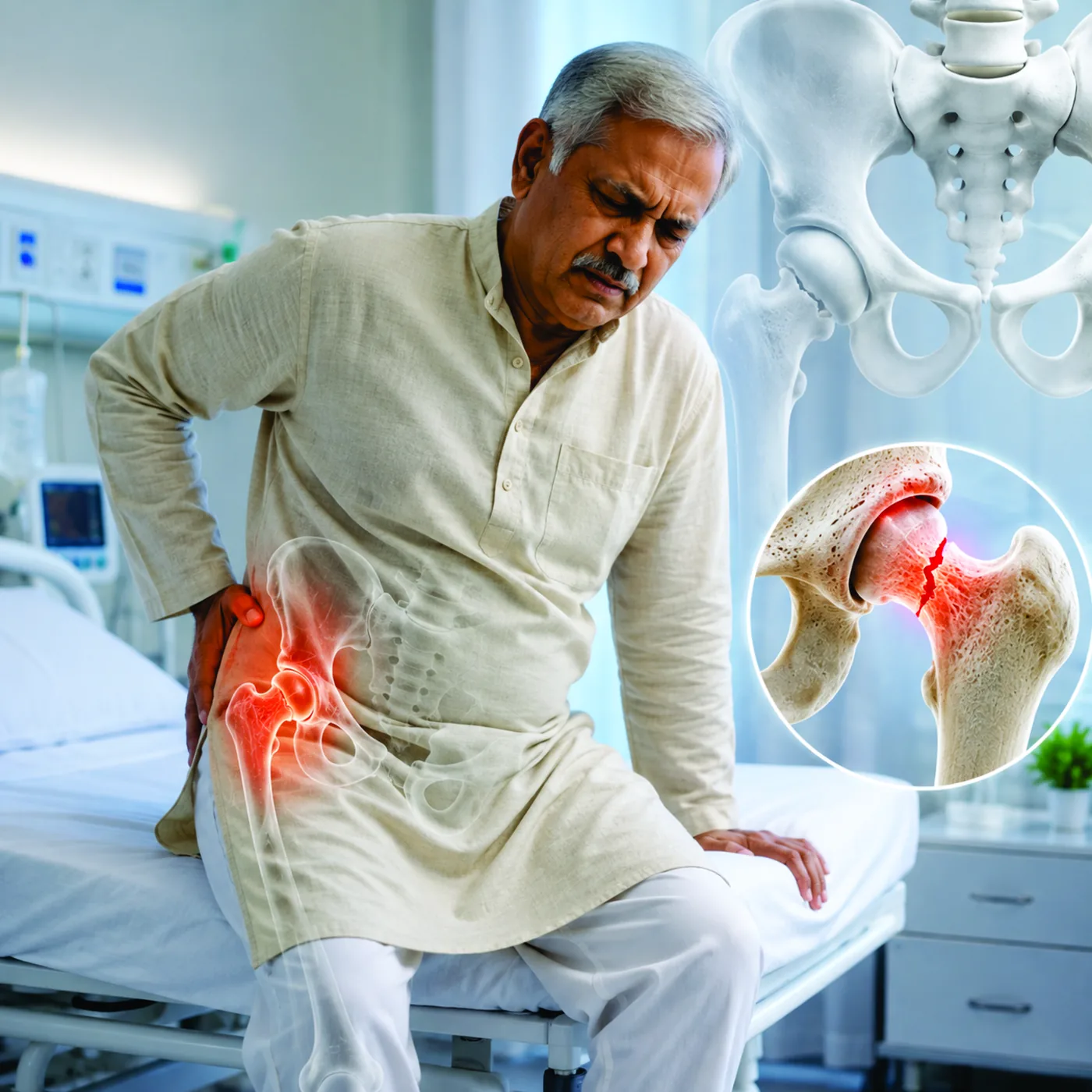
A suspected hip fracture after a fall or injury needs urgent medical assessment, especially when a person cannot stand or bear weight. Do not wait for a routine clinic appointment or an online reply. Use local emergency services or go to an appropriate emergency department. This page is an educational guide for patients and families in Bathinda. It does not diagnose a fracture, provide emergency triage or claim that a clinic consultation can replace hospital evaluation and treatment.
Treat a suspected fracture as urgent
A fracture can occur after a significant fall or, in some people, after a relatively minor event when bone is fragile. Severe hip or groin pain, inability to stand, difficulty moving the leg or a changed leg position can be warning signs, but only a clinician and appropriate imaging can assess the injury. Do not try to test the joint by forcing movement or asking the person to walk. Arrange urgent medical care. If the person is very unwell or cannot be moved safely, contact local emergency services for guidance.
What to do before medical help arrives
Keep the injured person as comfortable and still as possible while arranging care. Do not attempt to straighten, pull or manipulate the leg. Avoid giving food or drink if emergency clinicians advise that a procedure may be needed; follow emergency-service instructions. Keep warm, note the time and circumstances of the fall, and gather a list of medicines and allergies if it is safe to do so. Do not delay transfer to search online or wait for a routine appointment. Emergency professionals can advise on safe movement and transport.
Why urgent evaluation matters
A suspected fracture requires prompt assessment because pain, immobility and associated injuries can create additional risks, particularly for older adults or people with other health conditions. Emergency clinicians check overall health, examine the person, arrange appropriate imaging and decide whether other injuries need attention. The diagnosis and treatment plan depend on the fracture pattern, general health, medicines, mobility and patient preferences. This is why the exact treatment cannot be selected from a symptom description or a single website page.
What the hospital team may assess
The team may review how the injury happened, previous mobility, medical history, medicines, allergies and any symptoms such as dizziness or loss of consciousness. Examination and imaging help identify the injury and its location. Blood tests or medical review may be considered before treatment. Tell staff about blood thinners, heart or lung disease, diabetes, previous operations and recent illness. If the patient has an advance care plan or communication needs, share those details. A family member can help provide history, but the clinical team makes decisions with the patient whenever possible.
Treatment choices are individual
Treatment depends on the type and stability of the fracture, the patient’s health, mobility before the injury and the expected benefits and risks of different approaches. Some fractures may be treated surgically; the procedure and timing are decided by the hospital orthopaedic team. Other injuries may need a different plan. Do not assume that all hip fractures receive the same operation, implant or rehabilitation schedule. Ask the treating team to explain the diagnosis, proposed treatment, alternatives, anaesthesia review and how urgency affects the timing.
Questions for the hospital team
Families can ask: What type of injury has been found? What does the imaging show? Is an operation recommended and why? What alternatives are reasonable? What are the important risks for this patient? Who will provide anaesthesia and inpatient care? What support will be needed after discharge? When will physiotherapy begin? Who should be contacted if a concern develops? The team may not be able to answer every question immediately, but it should explain what is known and what remains uncertain. Request written instructions before leaving the hospital.
Medicines and health conditions
Bring an accurate medicine list, including anticoagulants, diabetes medicines, steroids, supplements and recent pain medicines. Do not independently stop or restart a medicine; emergency clinicians will advise what to do. Other conditions can affect anaesthesia, bleeding risk, infection risk and rehabilitation. Tell the team about allergies, prior reactions to anaesthesia, heart or lung disease, kidney problems, previous clots and recent infections. If the person has memory, hearing or communication difficulties, let staff know so that information and consent discussions can be supported appropriately.
Recovery and rehabilitation planning
Recovery after a fracture varies with injury pattern, treatment, health, strength before the fall and support at home. The hospital and rehabilitation team will advise when it is safe to sit, stand, use walking aids and begin exercises. Follow the plan rather than another person’s timeline. Families can help by learning safe transfers, medicine instructions, wound care if applicable and follow-up dates. Ask what equipment or home support is needed and whom to call if pain increases, mobility declines, a wound changes or a new symptom appears.
Preventing another fall
After urgent treatment, clinicians may review factors that contributed to the fall, such as balance, vision, medicines, footwear, home hazards or bone health. Prevention steps should be individual and coordinated with the treating team. Keep pathways clear, use prescribed walking aids and ensure lighting is adequate, but do not treat these measures as a substitute for medical review. Ask whether bone-health assessment or another clinician’s input is appropriate. Do not begin balance exercises until the treating team says they are safe after the injury.
Clinic contact is not emergency care
Nagpal Joint Clinic lists orthopaedic consultations in Bathinda, but a suspected fracture should first be assessed through emergency services or an appropriate hospital. A routine appointment form is not monitored as an emergency line and cannot arrange immediate imaging or transport. After the emergency team has assessed and treated the injury, the patient or family can ask whether an outpatient follow-up with an orthopaedic clinician is appropriate. Confirm the facility, appointment date and responsibility for follow-up directly with the treating team.
Information for families and carers
A fall can be frightening for the patient and family. Speak calmly, explain what is happening and avoid moving the injured person unnecessarily. Keep important documents accessible and share the patient’s usual mobility and support needs with the emergency team. Ask one family member to keep notes about the diagnosis, medicine changes and follow-up plan. If the patient can participate, include them in discussions and respect their preferences. For severe pain, inability to move safely or any immediate concern, follow emergency-service advice rather than waiting for a clinic callback.
Suspected fracture: use urgent hospital assessment
A possible hip fracture after a fall is not suitable for a routine website appointment. Sudden severe pain, inability to stand or bear weight, a shortened or unusually positioned leg, or a visible deformity needs urgent hospital evaluation. Avoid trying to make the person walk or move the injured leg repeatedly. Call local emergency services or follow the emergency-care instructions available in your area. A clinician must assess the injury and arrange appropriate imaging and treatment. This guide is not a substitute for emergency evaluation and cannot confirm whether a fracture has occurred.
Emergency first steps
If a hip fracture is possible, arrange urgent hospital assessment now. Do not force the leg to move or ask the person to stand. Follow local emergency-service advice, share medicine and allergy information with the treating team, and bring existing medical records if readily available. Do not delay care to complete an online form or wait for a routine call. After the emergency team has assessed the injury, ask who is responsible for follow-up, what movement is permitted and which symptoms should prompt an immediate return. Keep discharge notes and medicine changes together so the next clinician can review them.
Common questions
Should I book a routine appointment for a suspected hip fracture?
No. A suspected fracture needs urgent hospital assessment. Use local emergency services or go to an appropriate emergency department.
Can a person with a fracture walk to the clinic?
Do not ask the person to test walking. Keep them comfortable and follow emergency-service guidance for safe transport.
Will every hip fracture need the same surgery?
No. The injury pattern and the patient’s health determine the plan. The hospital orthopaedic team should explain options.
Can I send a form to get urgent advice?
No. The website form is for routine appointment requests and is not an emergency service.
What should I do after a serious fall with hip pain?
If a person cannot bear weight, has severe pain or a visible deformity after a fall, seek urgent hospital assessment. Do not wait for a routine clinic appointment.
Consultation at Nagpal Joint Clinic
Nagpal Joint Clinic is at Nagpal Superspeciality Hospital, Mall Road, Bathinda, Punjab 151001. The clinic lists Monday to Saturday hours from 10:00 AM to 7:00 PM. Call +91 98551-63355 to confirm current hours, availability and consultation fees before you travel. Bring existing reports or images, a list of medicines and allergies, and notes about the activities affected by your symptoms.
A consultation is an opportunity to discuss your symptoms and options; it does not commit you to surgery. If a procedure is recommended, ask which hospital or operating facility will provide it, who is on the clinical team, what the written estimate includes and how follow-up is arranged. Clinic services, fees and operating arrangements can change, so verify them directly.
Medical information: This page is for general education and is not a diagnosis or a substitute for care from a qualified clinician. Treatment suitability and outcomes vary. Seek prompt medical attention for severe or rapidly worsening symptoms.
For directions, open Nagpal Superspeciality Hospital in Google Maps. Confirm the location pin and travel arrangements before setting out.